

Breaking Ground: The Truck That Will Haul Us Forward
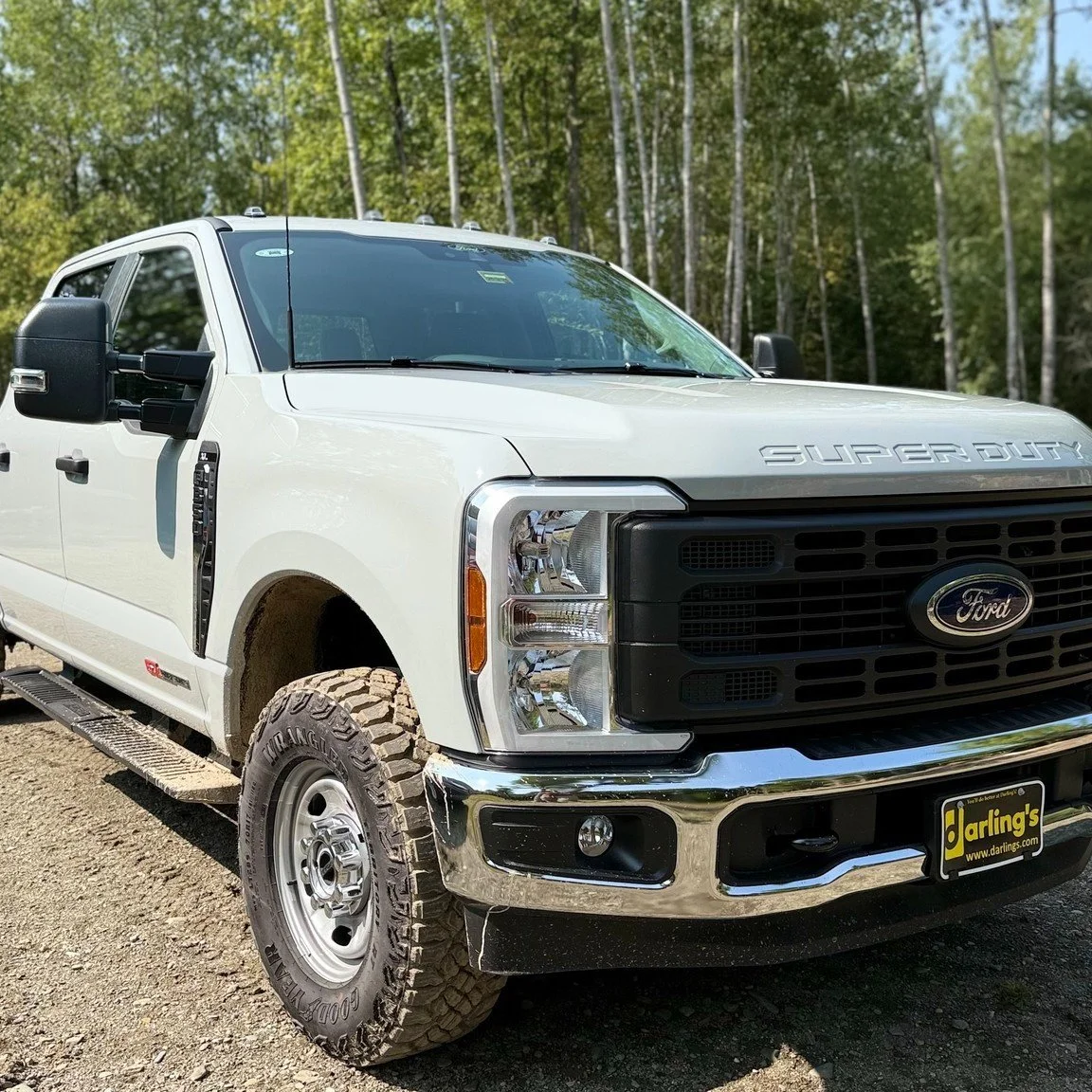
Ford F350 Super Duty is the right truck for the job!
Starting Siteworks Maine hasn’t just been about buying a machine and going to work — it’s been about building a system that works together. The CAT 275XE is the muscle, but the truck is the backbone. Without the right truck, nothing moves.
Why the Truck Matters
When you’re hauling heavy equipment every day, you don’t have much margin for error. I knew from the start that I’d need a truck built for more than commuting — it had to be ready for real work:
Towing a gooseneck trailer with a 12,700 lb machine, plus mulcher, buckets, grapple, and chains.
Handling long hauls across Central Maine’s back roads and highways.
Carrying everything needed to support the machine on site.
After a lot of research, I landed on the Ford F-350 Super Duty, spec’d for exactly what Siteworks Maine needs. It has the 6.7L High-Output Power Stroke® V8 Turbo Diesel
Gooseneck Ready
One of the most important decisions was making sure the truck was properly set up for gooseneck towing. A bumper pull setup just wouldn’t cut it for the kind of loads we’re moving — the CAT 275XE plus attachments and trailer add up quickly. The gooseneck gives more stability, better weight distribution, and confidence hauling on winding Maine roads.
Long Bed = More Capability
I chose the long bed version of the truck for a reason: it’s not just about bed size, it’s about flexibility. That extra space lets me install:
A fuel transfer tank for refueling the CAT on site (no wasted trips back to town).
A toolbox for chains, straps, and tools — everything needed to keep the job moving.
Room to still throw in smaller equipment, signs, or materials alongside.
It’s a mobile command center, not just a pickup.
Bigger Fuel Tank = Less Downtime
Another key factor in the build was opting for the larger fuel tank. When you’re driving across Central Maine and hauling heavy loads, stopping for fuel every couple of hours isn’t just annoying — it costs time and money. The larger tank gives me the range to haul the CAT to a site, run the job, and get home without worrying about refueling in between. It’s a small detail that makes a big difference when every hour matters.
The Power to Pull: 6.7L Diesel
Under the hood is Ford’s High Output 6.7L Power Stroke® V8 Turbo Diesel — built for hauling. With mountains of torque, this engine is designed to pull big gooseneck trailers and handle long days under load. It’s the kind of power you need when your business depends on getting equipment safely from one job to the next.
I didn’t want to cut corners here — having the right engine means peace of mind. Whether it’s climbing a grade with 25,000 pounds behind me or idling on site with a full load of tools in the bed, this truck is built to handle it.
Local Support Matters
Another huge part of this purchase was where I bought it. I worked with Tyler at Darling’s Ford in Bangor, and it made all the difference. Tyler was patient, helpful, and didn’t pressure me — he understood what I needed and why. Buying local matters to me. Siteworks Maine is about serving Central Maine, and it feels right to know I have a dealership nearby that I can count on for service and support.
Building the Foundation
When I drove the truck home, it wasn’t just about adding another asset. It was about laying the foundation for how Siteworks Maine will operate: reliable, efficient, and ready to serve. Every detail — from the gooseneck hitch to the fuel tank and toolbox — is part of a bigger system designed to keep jobs on track and clients happy.
This truck is more than transportation. It’s a tool, an investment, and a partner in every acre we’ll reclaim.
Next up in this series, I’ll share why I chose the CAT 275XE Compact Track Loader as the heart of Siteworks Maine — and how it will transform overgrown Maine land into usable space.
— Josué (or Josh for those who prefer not to try pronouncing my full name)
